Overview
-
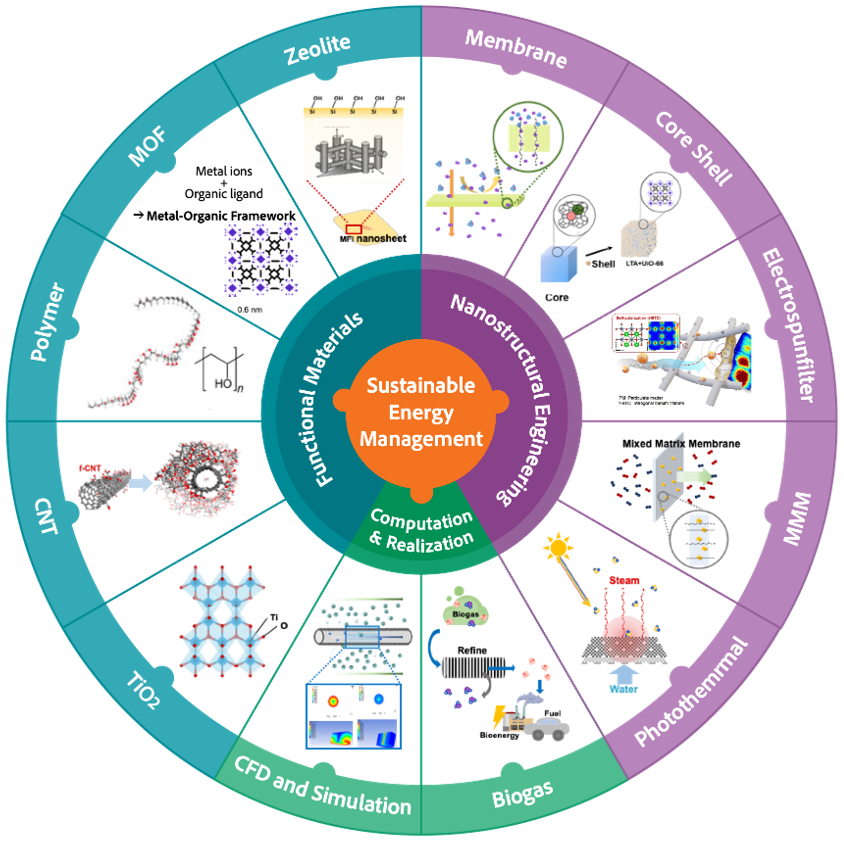
For years, Lee’s group has been dedicated to pioneering research in microporous materials and structural engineering, targeting their industrial applications in the interconnected realms of energy and the environment.
-
Our expertise lies in the precision synthesis of functional nanoporous materials, including zeolites, MOFs, and carbon-based structures. Our focus extends beyond synthesis; we specialize in precisely manipulating these materials, shaping them into two-dimensional particles and films, as well as intricate three-dimensional structures.
-
These endeavors are geared toward unlocking their full potential in addressing critical industrial challenges at the nexus of energy and environmental sustainability.
Conservation of the environment
-
Our research tackles crucial environmental issues: the impact of greenhouse gases and the significant air quality degradation caused by fine dust particles. Ensuring clean water access is also a priority.
-
We employ advanced microporous materials, like zeolites and MOFs, processing them extensively to create sophisticated membranes with nano-sized pores. These engineered membranes enhance gas capture efficiency, addressing industrial emissions.
-
Our research explores electrospinning for multi-scale 3D porous networks, aiming to create fine dust filters for improved air quality. In water purification, TiO2 nanocrystals act as catalysts under UV light, facilitating a highly effective oxidation process for cleaner and safer water.

Resource recovery
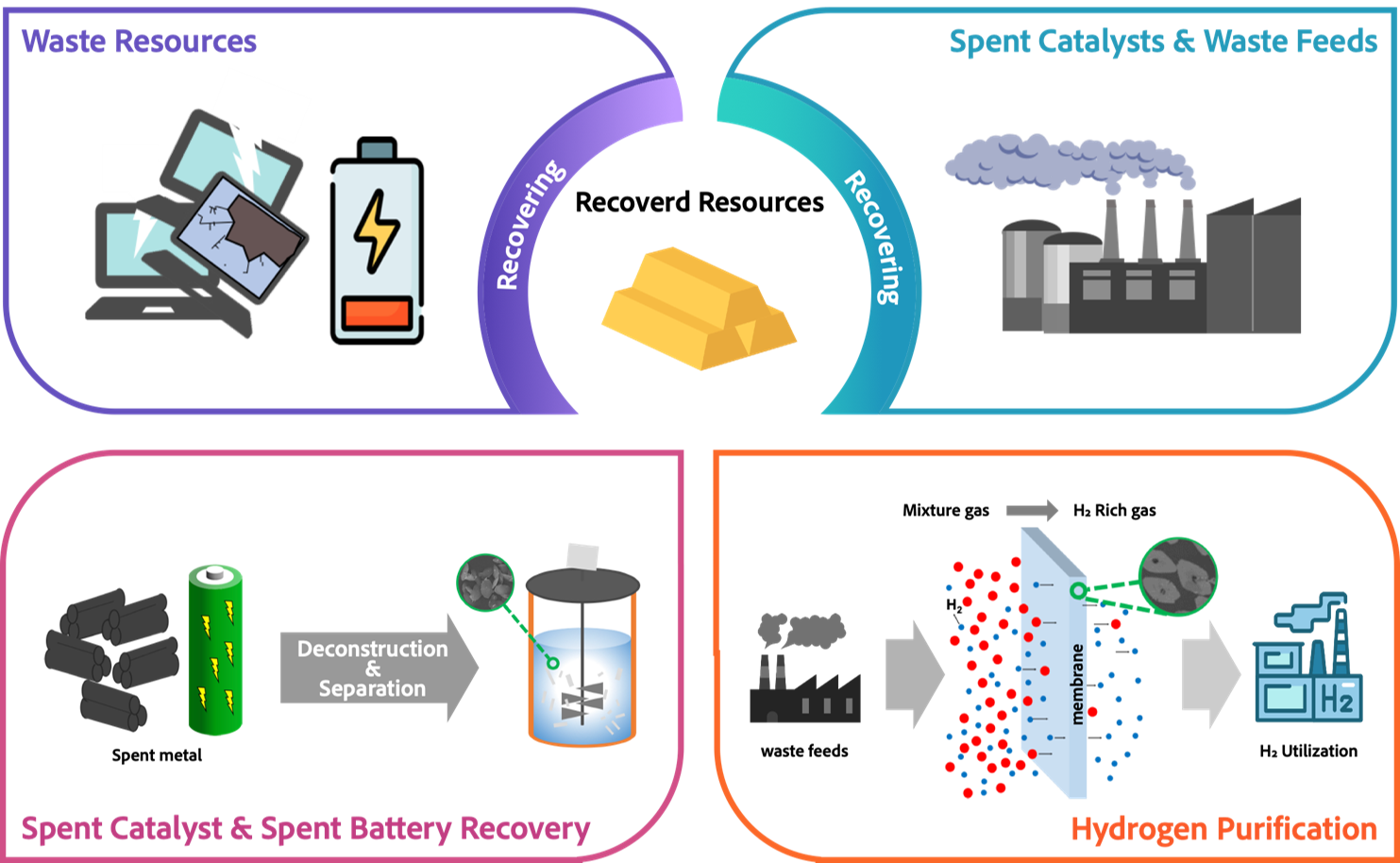
- Our primary focus extends to recovering precious metals from spent catalysts and batteries, crucial for sustainability. These materials contain valuable elements essential in electronics and renewable energy.
- Using functional microporous materials, we study efficient recovery methods to mitigate environmental impact, fostering a circular economy. Additionally, we extend our focus to hydrogen purification from industrial waste feeds, crucial for clean energy.
- Employing energy-effective membrane technology ensures sustainable resource use, minimizing waste and reducing the environmental impact of hydrogen-dependent industries.
Sustainable devices and power generation
-
Harnessing environmental energy for water production and electronics is a promising path for sustainable development. Renewable sources like solar, wind, and hydroelectric power can desalinate seawater or purify freshwater, addressing global water scarcity.
-
This energy also powers electronic devices, integrating clean energy into critical industries, minimizing their carbon footprint. Additionally, converting C1 organics, like methane or carbon monoxide, using zeolite-based membrane reactors holds significance in sustainable chemistry and energy applications.
-
These abundant sources can be selectively transformed into higher-value chemicals or fuels, contributing to essential industries like energy, chemicals, and transportation.

Engineering of separation system
-
Our group also emphasizes developing separation systems by integrating membrane design and CFD simulation for greenhouse gas capture and biogas purification.
-
This integrated approach, combining theoretical design, practical implementation, and CFD simulations, aims to optimize systems meticulously, enhancing efficiency, selectivity, and environmental impact in addressing greenhouse gas challenges.

 Energy and Separation Materials Laboratory